IT support and maintenance for businesses
When computers, accounts, printers, networks or business applications stop working, the impact goes beyond technology. Employees are left waiting, customers receive no response and management is unsure who is responsible. We help businesses establish regular, responsive and documented care for everyday IT.
We provide IT support and maintenance for businesses in Gorenjska and Ljubljana. We resolve issues remotely and carry out physical work at your premises by arrangement.
This service is for businesses without an in-house system administrator and teams whose IT specialist needs second-line support. We organise devices, users, permissions, updates, records and a clear process for reporting issues.
When IT needs structure rather than another workaround
This service is a good fit when IT problems are addressed only after an outage, devices and licences are not recorded, or employees have no consistent way to get help. It gives management clearer responsibilities, more predictable costs and a concise view of outstanding risks.
Instead of waiting for a complete overhaul that never starts because it is too large, we improve your environment in stages. We identify the greatest risks and sources of wasted time, put the basics in place and then make changes in a clear order. Technology purchases follow a specific business need.
IT is addressed only after an outage
Users have no agreed route to support, so tasks get lost between phone calls, private messages and urgent interruptions.
Devices and licences are not recorded
Information about equipment, accounts, licences and suppliers depends on individual memory.
Access has no clear process
New employees wait for access, former employees' accounts stay active and permissions are granted without a traceable process.

Do any of these situations sound familiar?
Recurring problems do not necessarily mean you need more tools. They often point to missing records, procedures, responsibilities or timely reviews. A structured start identifies what is critical, what could cause an outage and what should be addressed first.
No clear route to support
Employees do not know whom to contact when they lose access to email, files or a business application.
Risks keep building up
Irregular updates allow faults, incompatibilities and basic security risks to accumulate over time.
Permissions are not controlled
Former employees' accounts remain active and role changes happen without an agreed procedure.
The environment is not documented
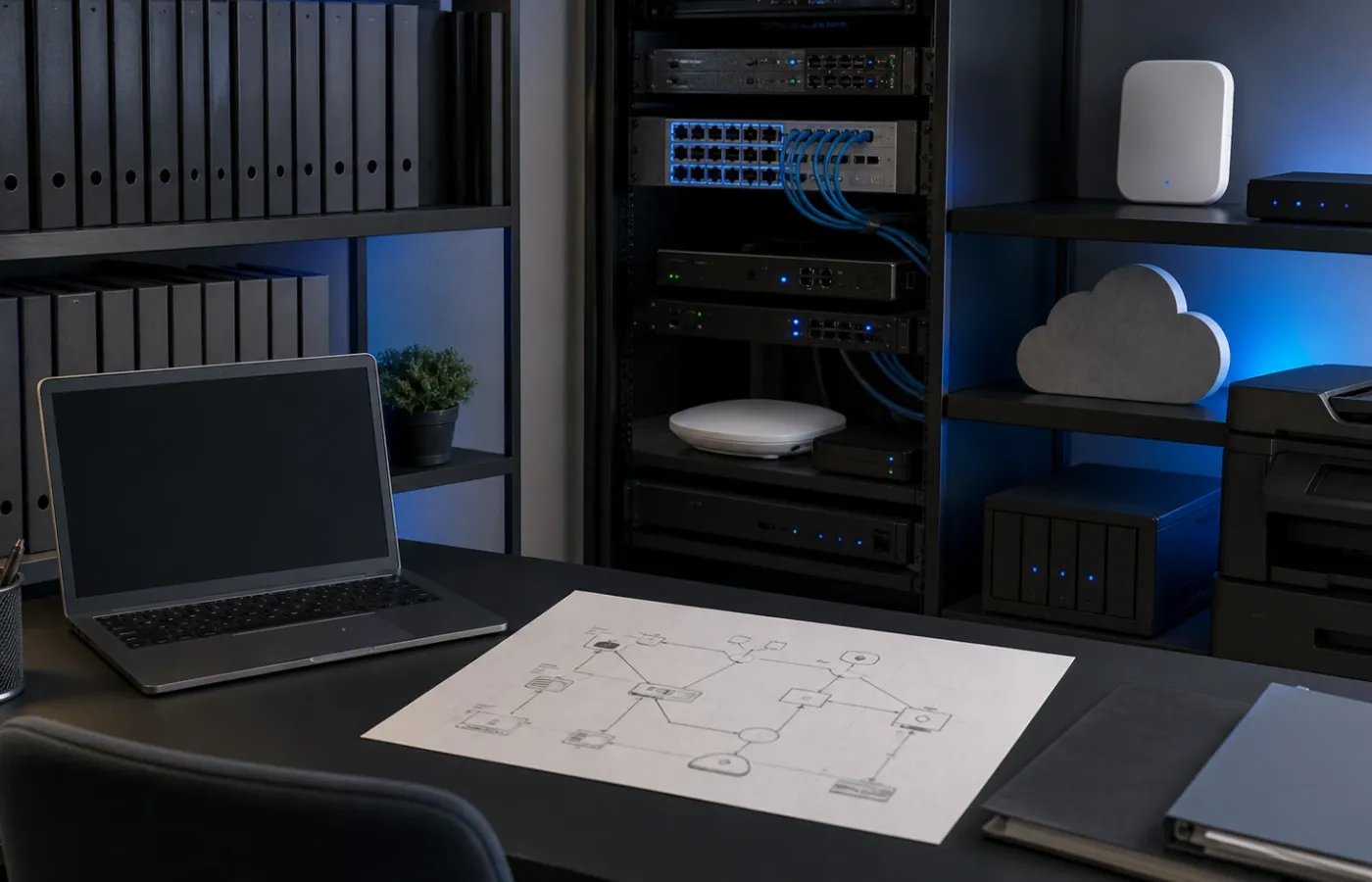
Devices, licences, key suppliers and dependencies are not recorded in one place accessible to those responsible.
Every new device is an exception
Each new device is set up differently, increasing preparation time, errors and the support users need.
The same faults keep returning
Recurring issues are not recorded, so diagnosis and problem-solving start again with every incident.
No list of next steps
Management lacks a clear view of the current state, outstanding risks and proposals that can be prioritised for approval.
From everyday assistance to an organised environment
The scope adapts to your environment, but the goal stays the same: fewer interruptions, faster resolution and IT knowledge that remains accessible when staff or suppliers change. We assess every change in terms of users, business processes, data and time constraints.
For each area, we review the existing setup, its dependencies and who uses or maintains the service. We then identify the changes that are actually needed and how to verify them. Success means a solution people can use, the responsible person understands and the business can maintain over time. Any further work is clearly separated from the initial scope and explained in terms of business benefit and risk.
Devices, licences and services
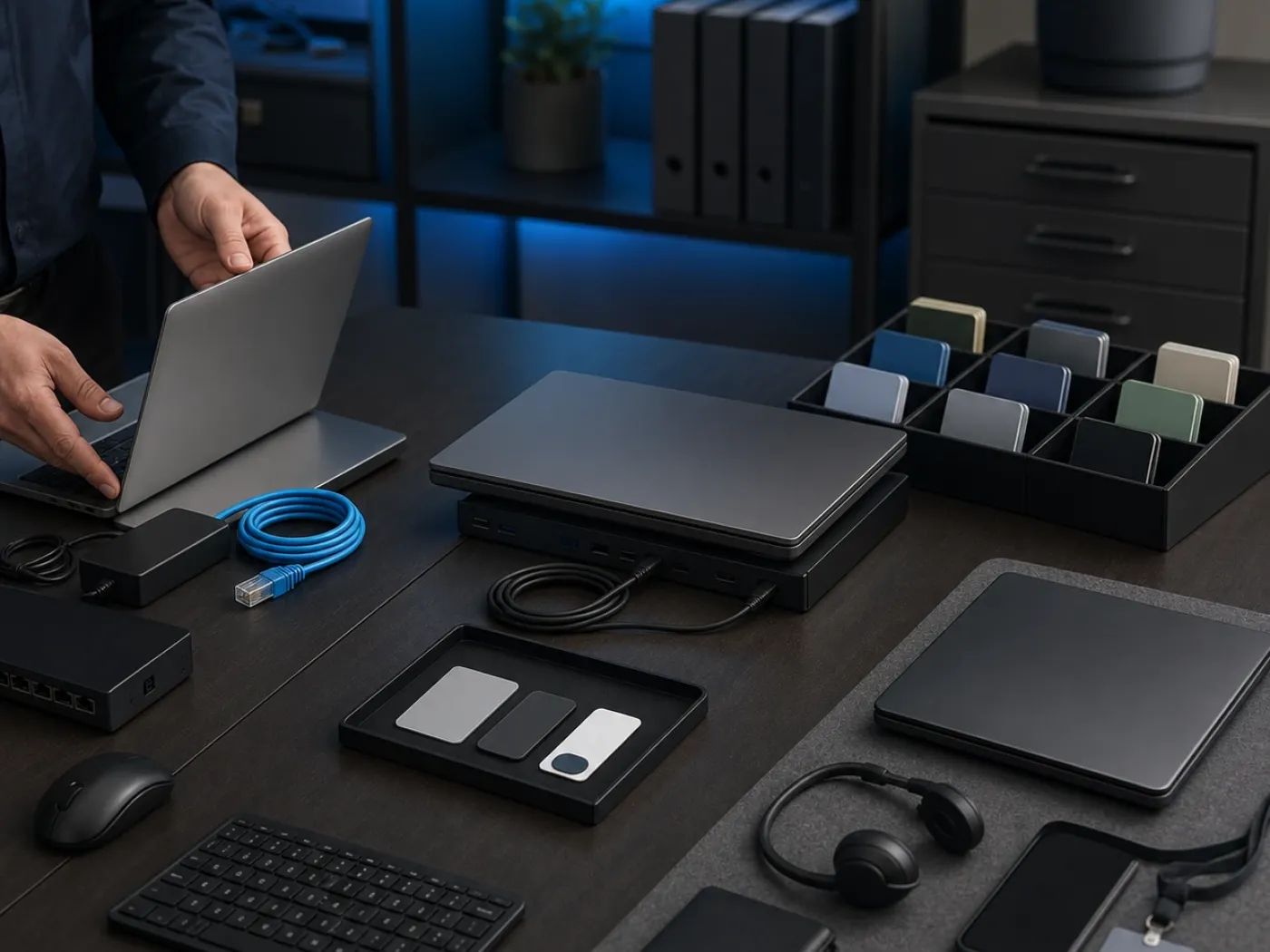
We create a practical overview of workstations, servers, network equipment, licences, user accounts and key suppliers. Important configurations, responsibilities and decisions are documented.
Users and access
We define procedures for new starters, role changes and leavers. We organise accounts, mailboxes, shared folders, VPN access and administrator privileges around your business processes.
Updates and essential protection
We monitor updates for operating systems and important software, scheduling the work around your business. Changes are checked and documented.
User support
We resolve problems with computers, email, files, printers, video calls and remote access, with a clear distinction between urgent and routine tasks.
Monitoring key services
Where needed, we monitor availability, capacity, backup status and important errors so that some problems are spotted before they prevent people from working.
Device standards
We establish baseline settings for new computers, user profiles, protection and software so that setup becomes predictable and repeatable.
Documentation and suppliers
We record changes and, where needed, coordinate work with internet, telephone, hosting and business software providers.
Regular environment reviews
With monthly support, we review open tasks, ageing equipment, licences, risks and planned improvements.
Support that reduces recurring interruptions
A good solution is measured by everyday results rather than the number of tools involved. Users know how to get help, responsible people know where to find documentation, troubleshooting does not rely on memory and the business can expect a clearer response when something fails.
When accounts, devices, contracts, suppliers and important decisions are recorded together, changes do not get stuck with one person. This matters when your team grows, employees change, new services are introduced or an issue needs quick coordination. Clear records shorten the path to the right decision.
Fewer interruptions
We identify and address recurring causes rather than treating only the symptoms each time.
Faster resolution
The environment, responsibilities and important access rights are known and documented, allowing work to start sooner.
Clearer management
Device, account and supplier records support security, backup and budget planning.
We plan, verify and document changes
We start with your business goal and the consequences of an outage. We review the current state, documentation, dependencies and constraints. For larger changes, we agree the sequence, user impact and rollback approach before working in production.
Once approved, work is carried out in stages at an agreed time. Where appropriate, we test changes separately or prepare a rollback option. Afterwards, we verify the result, update documentation and agree what needs monitoring. Additional needs are grouped into urgent actions, important improvements and work that can wait. You receive clear priorities rather than an open-ended technical wish list.
Agreeing the goal and scope
We identify services, users, locations, urgency and the business consequences of an outage.
Current state, dependencies and risks
We review the environment, existing documentation, constraints and areas needing priority action.
Approved changes, delivered in stages
We work at the agreed time and, where appropriate, test a change separately first.
Verification and next priorities
We verify the result, update documentation and separate urgent actions from important improvements and work that can wait.
The quickest safe route to a solution
Remote support is our usual way of working. We establish a secure, documented method of remote maintenance, identify authorised people and organise essential access. This lets us check service status, logs, updates, permissions, connectivity and settings without waiting for a visit.
When remote work is unsuitable, insufficient or restricted by security requirements, we work on site. This includes physical equipment, cabling, measurements, device replacement, local recovery and other tasks that cannot sensibly be handled remotely. The goal is the quickest safe solution in each situation.
Secure remote maintenance does not mean unlimited access. Permissions are agreed, authorised people are identified and activity is limited to the support required. This allows a quick response while keeping important changes traceable and controlled.
Clear boundaries and responsible delivery
Before starting, we agree the scope, authorisations, change approvals and handling of access rights. Work that may significantly affect availability, data or costs requires prior approval. Any licence, external service, supplier or specialist partner needed is identified in advance. Documentation and verification are part of delivery, rather than an unexpected extra at the end.
IT support and maintenance: frequently asked questions
If your question is not answered below, include it when you first contact us. For a useful initial assessment, tell us your company size, number of users or sites, main services and current problem.
Yes. The scope is adapted to the number of users, devices and locations and the complexity of your environment. We can begin with a limited assessment, then agree a project or ongoing support.
No. We can cover the entire environment, act as second-line support for your in-house IT specialist or take on agreed areas such as users, devices, documentation or supplier coordination.
We agree the method together: email, telephone, a form or a ticketing system. Urgent incidents are separated from routine tasks so that response priorities and expectations are clear.
Larger migrations, upgrades and changes have their own plans, scope and verification. Regular support covers the agreed scope; additional needs are described and prioritised before work begins.
Yes. Remote support is usually quickest, but physical work, cabling, measurements, device replacement, local restores and similar tasks are carried out at your premises when appropriate or necessary.
Start with a clear assessment
For an initial assessment, describe your company size, number of users or sites, main services and current issue. Tell us whether this is urgent or a planned improvement. We will suggest a suitable assessment, project approach or ongoing support arrangement.